Nomothetic/Idiographic
11vii26
(links gathered to help me think through issues raised by David MacInnes correspondence)
Historical particularism Wikipedi
Historical particularism in Anthropology Anthroholic
Historical Particularism: Understanding Culture Through Context
Boasian Anthropology: Historical Particularism and Cultural Relativism anthrotheory.pbworks.com
CRITICAL IMPLICATIONS OF FRANZ BOAS' THEORY AND METHODOLOGY JSTOR
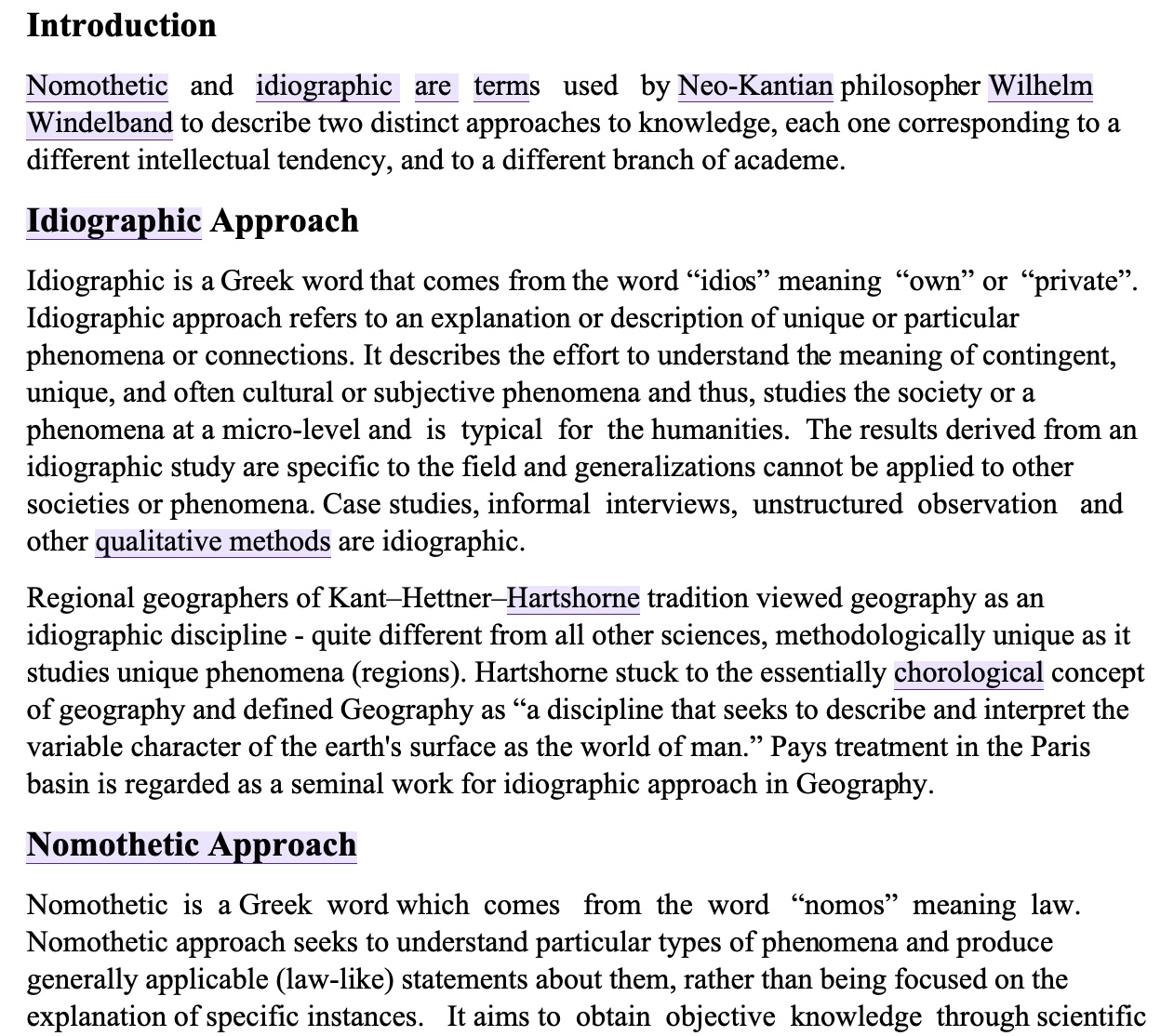
Nomothetic and idiographic Wikipedia
...In sociology, the nomothetic model tries to find independent variables that account for the variations in a given phenomenon (e.g. What is the relationship between timing/frequency of childbirth and education?). Nomothetic explanations are probabilistic and usually incomplete. The idiographic model focuses on a complete, in-depth understanding of a single case (e.g. Why do I not have any pets?).In anthropology, idiographic describes the study of a group, seen as an entity, with specific properties that set it apart from other groups. Nomothetic refers to the use of generalization rather than specific properties in the same context.
Bridging the Nomothetic and Idiographic Approaches to the Analysis of Clinical Data Adriene M Beltz et al. (2017)
Nomothetic versus Idiographic Research Adam Blatner
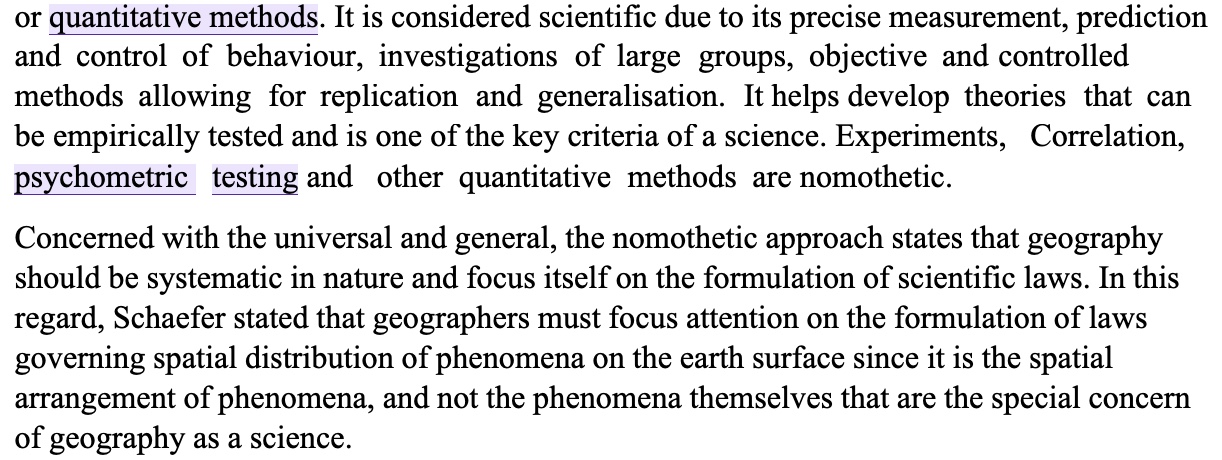
Nomothetic vs Idiographic in Geography
Examples or Evidence? Savage Minds
Anthropology is Not Ethnography (2007) TIM INGOLD (pdf)
Beyond the End of Anthropology: Ethnography and its Discontents History of Anthropology Review
Key critical concepts for ethnomusicology Canadian Centre for Ethnomusicology
...Nomothetic vs Idiographic knowledge:Nomothetic is based on what Immanuel Kant described as a tendency to generalize, and is typical for the natural sciences. It describes the effort to derive immutable laws that explain objective phenomena in general terms, often in quantitative terms.
- Nomos: law
- Idios: unique
Idiographic is based on what Kant described as a tendency to specify, and is typical for the humanities. It describes the effort to understand the meaning of contingent, unique, and often subjective phenomena, usually in qualitative terms.
How to trace nomotheses (seeking laws) and idiographs (seeking meaning)?
- Broad correlations between music and culture across the globe (e.g. Lomax's cantometrics)
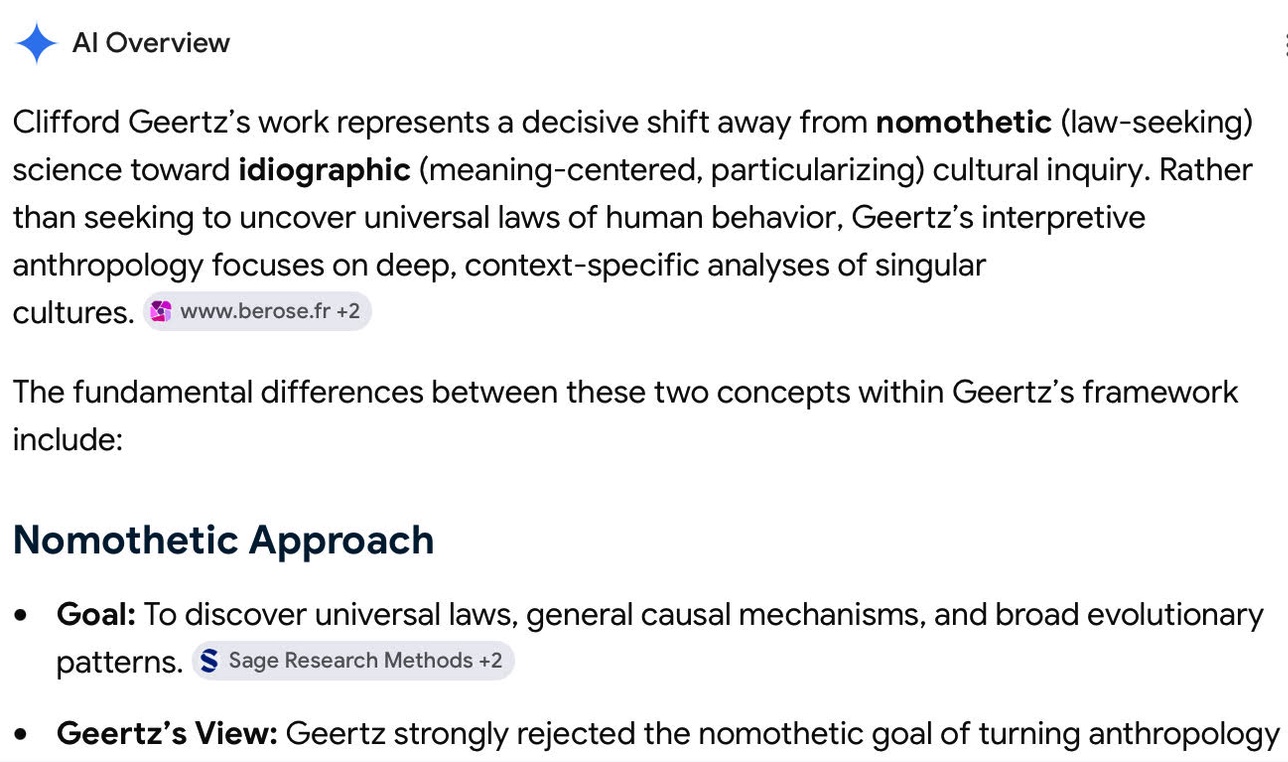
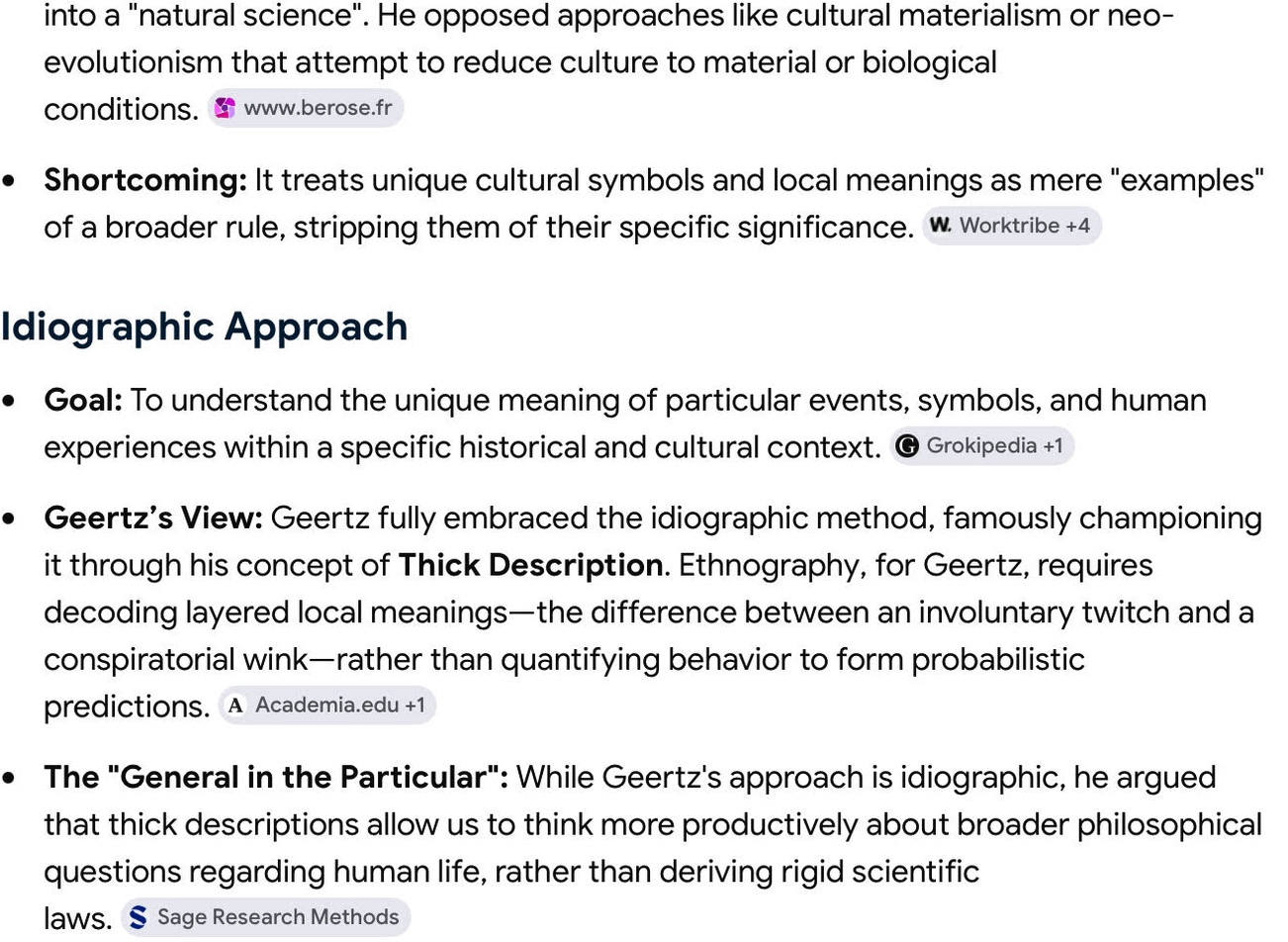
- Deep understanding of musical meaning in a single locale (e.g. Clifford Geertz's interpretive anthropology)
- "etic" perspective is (supposedly) objective - from a neutral scientific point of view, whereas
- "emic" perspective is informed by the culture under consideration, the insider's view, expressed/shaped by linguistic concepts (the premise of cognitive anthropology)
The Work and Legacy of Clifford Geertz An Essay on the Interpretive Turn in Anthropology Roberto Malighetti (2020) (pdf)